February 18, 2026

Meditation as a form of therapy.

Hi! My name is Daria. I am a meditation guide and mindfulness coach devoted to integrating ancient wisdom with modern science, helping others reconnect with their innate wholeness.

Today I would like to talk about FORGIVENESS.

Yes, we all have deadlines and responsibilities. And yes the world feels intense sometimes.

But have you ever looked inside in silence and asked yourself:

How do I feel right now about:

  • Unforgiven words?
  • Unprocessed disappointments?
  • Old betrayals?
  • Failures I never made peace with?

Do I still judge some versions of myself?

Usually we simply carry them quietly.

But carrying is heavy. Isn't it?

The truth is: when we are not able to forgive, the body does not forget. The nervous system does not forget.

Research in psychology and neuroscience shows that holding onto anger and resentment activates the stress response in the body. Studies from Stanford University’s Forgiveness Project found that people who practiced forgiveness experienced reduced levels of stress, anger, and hurt, and increased levels of optimism.

Chronic resentment, in contrary, has been linked to elevated cortisol levels — the primary stress hormone — which over time contributes to anxiety, sleep disturbances, high blood pressure, and even weakened immunity.

It is fascinating, isn’t it? The past is over, but the body still reacts as if it is happening now.

Dr. Frederic Luskin, who has led decades of research on forgiveness, found that learning to forgive significantly reduces symptoms of depression and anxiety. When people shift from rumination to forgiveness, they experience measurable improvements in emotional well-being.

And maybe you have felt this in your own life.

Have you noticed that once you made peace with someone — truly made peace — the sun starts shining brighter? The air feels lighter. You breathe deeper without even trying.

Nothing outside changed.
But something inside did.

Forgiveness is not about saying that what happened was acceptable. It is not about approving bad behavior. It is not about becoming passive.

It is about releasing yourself from the emotional prison of the past.

Joe Dispenza often speaks about how emotions are chemical states in the body. When we rehearse anger, when we replay resentment, the body becomes addicted to those familiar stress chemicals. We can become conditioned to live in survival mode — in bitterness, blame, defensiveness — without even realizing it. According to neuroscience, the more we fire certain emotional patterns, the more wired they become.

But the opposite is also true.

When we intentionally cultivate compassion, gratitude, and forgiveness, we begin to rewire those neural pathways. Research in neuroplasticity confirms that the brain changes based on repeated emotional experiences. Studies on loving-kindness and compassion meditation show increased activity in brain regions associated with empathy and emotional regulation, and decreased activation in areas linked to fear and threat response (such as the amygdala).

We replace chronic stress chemistry with states associated with safety and connection. Oxytocin and serotonin begin to flow more freely. The parasympathetic nervous system — the part responsible for rest and healing — becomes activated.

And something very beautiful happens.

When we forgive ourselves for our failures, for not knowing better at the time, for being imperfect humans learning through mistakes — we soften. And when we soften toward ourselves, it becomes easier to soften toward others.

It is difficult to forgive others while still punishing yourself.

But when you can say:

“I did the best I could with the awareness I had then.”
“I am allowed to grow.”
“I am allowed to change.”

something shifts.

Bitterness begins to dissolve. And in its place, there is space.

From that space, joy naturally appears.

Not forced joy. Not toxic positivity.
But a quiet, grounded joy.

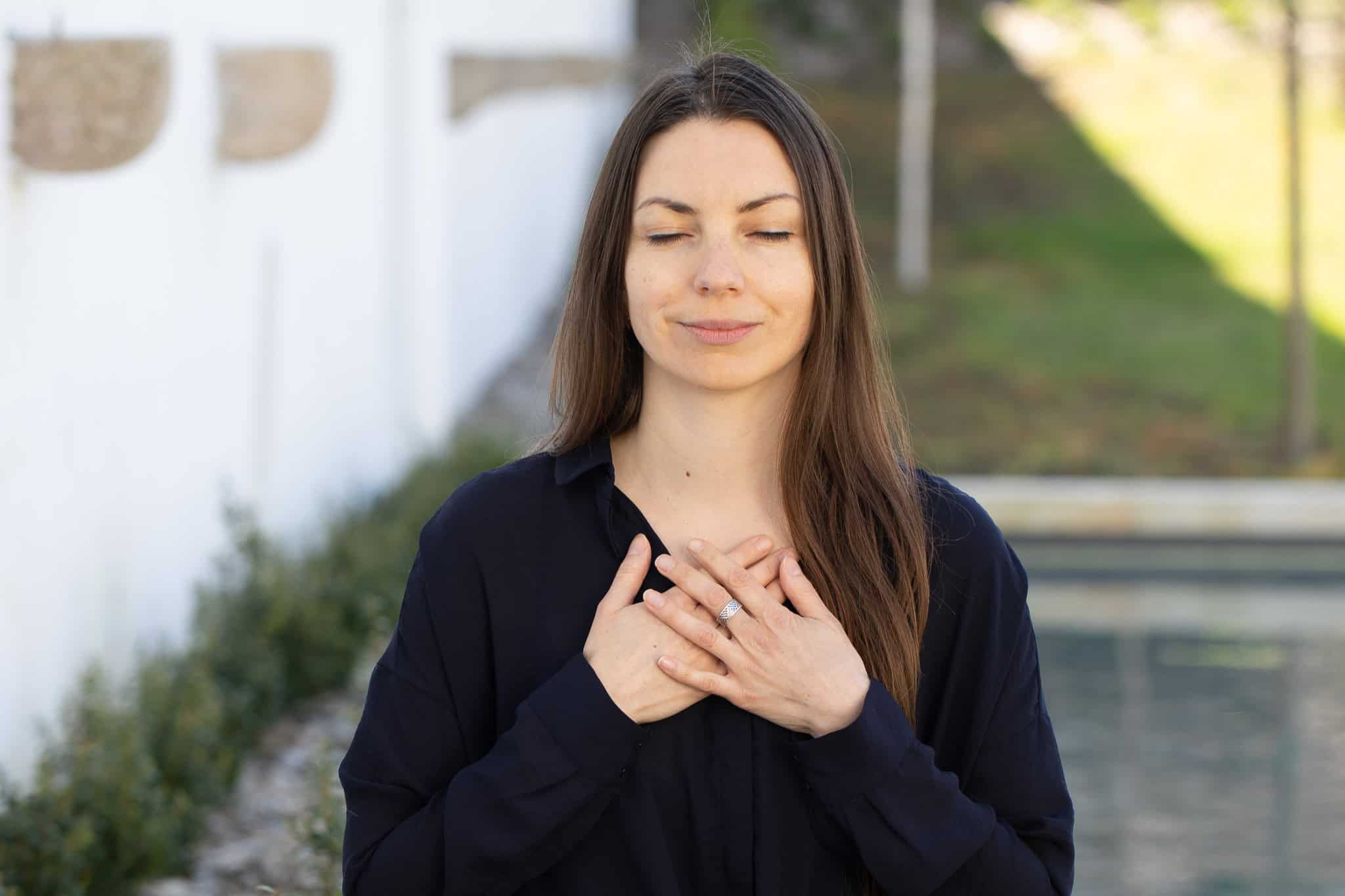
1. Portrait of Daria Gatska with mountain landscape background, outdoor photography.

Forgiveness is also making peace within yourself. Sometimes the conflict is not even with another person. It is between who you were and who you are becoming. Between expectations and reality. Between the life you imagined and the life that unfolded.

And still — you can choose to release.

This is where meditation becomes not just a practice, but a form of therapy.

In guided meditation, you are invited to observe your emotions without being overwhelmed by them. You can sit with anger without exploding. You can acknowledge resentment without feeding it. You can allow sadness without drowning in it.

Meditation activates brain regions involved in emotional regulation and decreases reactivity in the amygdala. It helps create space between stimulus and response. That space is where forgiveness becomes possible.

In a safe, guided space, you can:

• Revisit painful memories without feeling judged
• Feel anger without being consumed by it
• Offer compassion to yourself gently
• Visualize release
• Invite love back into the heart

You do not have to force forgiveness.
You do not have to pretend.
You simply allow.

And if you do not know where to begin, I'd be honored to support and guide you.

For you to become free.

With kindness,

Daria 💚

February 11, 2026

Why your confidence changes depending on who’s in the room?

Have you ever noticed how confident you feel in one meeting… and completely unsure of yourself in another?

You can speak freely with peers.
You feel relaxed and your body language is open.

Then a certain person walks into the room be it a senior leader, a dominant colleague, and suddenly:

You overthink.
You hesitate.
Your voice changes.

It feels like your confidence just disappeared.

But it didn’t.

Confidence is not a fixed trait

We tend to think of confidence as a personality characteristic.
Something you either “have” or “don’t have.”

But confidence is not fixed.

It’s contextual.

More specifically, it’s physiological.

Confidence is the natural expression of a regulated nervous system.

When your nervous system feels safe, you can:

  • Think clearly

  • Speak with ease

  • Stay present under pressure

When it detects threat, even subtle social threat, your body shifts into protection mode.

And protection mode is not designed for confident self-expression.
It’s designed for survival.

What actually happens in the body?

Your nervous system is constantly scanning your environment for cues of safety or danger. This happens below conscious awareness.

Certain people can unconsciously register as “threat” because they represent:

  • Authority

  • Evaluation

  • Rejection

  • Competition

  • Past experiences of criticism or dismissal

When that happens, your system may shift into:

Fight → defensiveness, sharp tone
Flight → overexplaining, rushing, anxiety
Freeze → blank mind, inability to speak
Fawn → people-pleasing, self-doubt, shrinking

None of these responses mean you are incompetent.

They mean your nervous system is protecting you.

What you can do when your voice tightens or you start doubting yourself?

I. Take a slower breath. 

A longer exhale activates the parasympathetic nervous system which is the part responsible for regulation and social engagement.

How to do it:

  • Inhale naturally through your nose.

  • Exhale slowly through your mouth for 1–2 seconds longer than your inhale.

  • Repeat 3–5 times.

Don’t force it. Just slow it.

II. Ground Through the Feet

When we feel socially threatened, energy often rises upward (shows up as a tight chest and racing thoughts).

Grounding brings awareness back into the body.

How to do it (while seated or standing):

  • Press your feet gently into the floor.

  • Feel the support underneath you.

  • Slightly straighten your spine without forcing posture.

This increases stability and embodiment which directly supports confident expression.

III. Orienting to Safety (30–60 seconds)

When you enter a room that activates you, your nervous system narrows its focus toward threat.

Orienting gently tells your body: I am safe right now.

How to do it:

  • Slowly look around the room.

  • Notice 3 neutral or pleasant objects (a plant, light from the window, a notebook).

  • Let your eyes land on something steady for 5–10 seconds.

  • Take one slow exhale.

This shifts your system from hypervigilance to presence.

It’s subtle. No one will notice you doing it.

If you need any further support, explore my services ✅

I am happy to create a tailored individual program which will help reduce stress and boost your confidence.

With kindest regards,
Daria

February 19, 2025

The Power of Meditation in the Workplace

Meditation helps being present and fosters active listening

Effective communication is the foundation of any successful organization. Meditation helps employees develop mindfulness, allowing them to become more present during conversations. It fosters active listening, reduces impulsive reactions, and cultivates empathy, leading to more meaningful and productive discussions. When individuals are calm and centered, they can articulate their thoughts more clearly and navigate conflicts with greater ease, resulting in healthier workplace relationships.

Enhanced Creativity and Innovation

Meditation has been proven to boost creative thinking by encouraging a relaxed yet alert state of mind. When employees are less stressed, they are more likely to think outside the box, generate new ideas, and approach problems with fresh perspectives. Many leading companies, such as Google and Apple, encourage mindfulness practices to foster innovation and maintain a competitive edge.

Reduced Workplace Stress and Burnout

Bringing meditation into the workplace doesn’t have to be complicated. Here are some simple ways to incorporate it into daily routines:

  • Start meetings with a brief mindfulness exercise to set a focused and calm tone.
  • Create a quiet meditation space where employees can take short breaks to reset their minds.
  • Offer guided meditation sessions with a professional guide / instructor
  • Encourage deep breathing exercises during stressful moments to help employees regain focus.

Boosted Productivity and Focus

Distractions are a major challenge in any workplace, reducing efficiency and increasing errors. Regular meditation enhances focus by training the mind to stay present, minimizing distractions and improving attention span. Studies have shown that even a few minutes of daily mindfulness practice can significantly enhance concentration, helping employees complete tasks more efficiently. Additionally, reduced stress levels lead to better decision-making and time management, making employees more productive in their roles.

Do you consider implementing guided meditation sessions in your workspace? I will be more than happy to help you with that.

With gratitude & kindness,

Daria

February 19, 2025

The Art of Breathing & Meditation

The art of breathing and meditation offers a simple yet profound way to reconnect with ourselves, reduce stress, and cultivate a sense of inner peace.

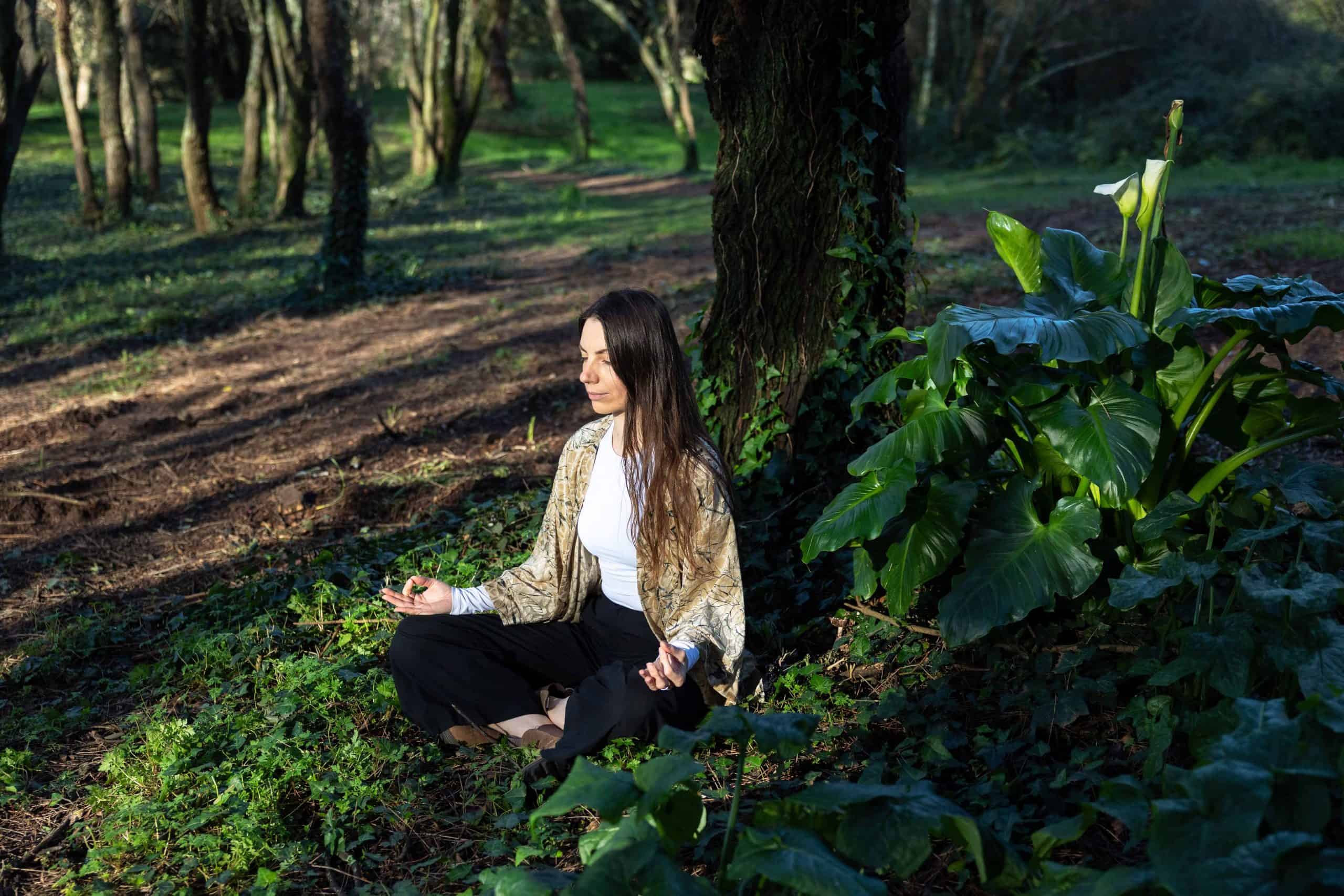
Peaceful woman practicing meditation outdoors in a lush forest setting for mindfulness and relaxation.

Relaxing meditation session in a peaceful forest, focusing on mindfulness and mental clarity.

Unveiling the Benefits of Conscious Breathing

Breathing is something we do naturally, yet few of us pay attention to how we breathe. The breath is closely linked to our mental and emotional states; shallow breathing can lead to tension, while deep, controlled breathing promotes relaxation. By practicing mindful breathing, we can regulate our nervous system, increase oxygen flow, and enhance overall well-being. Deep breathing activates the parasympathetic nervous system, which helps switching from "flight or fight" mode to "rest and digest"

Meditation: A Gateway to Mindfulness

Meditation is an ancient practice that involves focusing the mind and eliminating distractions. By integrating breathwork into meditation, we can cultivate mindfulness and develop a deeper awareness of the present moment.

The art of breathing and meditation is a powerful tool for achieving balance, clarity, and peace in our hectic lives. By dedicating a few moments each day to conscious breathing and mindfulness, we can cultivate a profound sense of well-being and resilience. Start today—take a deep breath, let go of stress, and embrace the present moment.

Would you like to cultivate the inner peace and become more resilient ? Consider booking a 15 min consultation with me to know more about 1 - on - 1 session.‍

With gratitude & kindness,

Daria

February 4, 2025

The Power of Gratitude: How Appreciation Can Shift Mindset

In today’s fast-paced world, it’s easy to get caught up in stress, negativity, and the constant pursuit of more. Amidst all this, practicing gratitude meditation daily can be a powerful tool to shift our mindset and bring a sense of peace and fulfillment. But why is it so important to make gratitude meditation a part of our everyday routine?

Gratitude

1. Shifts Focus to Positivity

Gratitude meditation helps rewire the brain to focus on what’s going well rather than what’s lacking. By acknowledging the good in our lives, we cultivate a more positive outlook, which can significantly improve our overall well-being.

2. Reduces Stress and Anxiety

When we focus on gratitude, we naturally reduce stress and anxiety. Gratitude meditation promotes relaxation by shifting attention away from worries and redirecting it toward appreciation. This shift lowers cortisol levels, helping us feel calmer and more centered.

3. Enhances Emotional Well-being

Regular gratitude meditation fosters emotional resilience and a greater sense of happiness. It encourages self-reflection, strengthens emotional intelligence, and helps develop a deeper connection with ourselves and others.

4. Improves Sleep Quality

Practicing gratitude before bedtime can enhance sleep quality by reducing negative thoughts that might keep us awake. Focusing on positive experiences and appreciation creates a sense of contentment, allowing for deeper and more restful sleep.

5. Strengthens Relationships

Expressing gratitude towards others strengthens bonds and fosters deeper connections. Gratitude meditation encourages us to appreciate those around us, leading to more meaningful interactions and a stronger sense of community.

How to Incorporate Gratitude Meditation Into Your Routine

  • Start with a few minutes: Begin with 5–10 minutes of quiet reflection each day.
  • Focus on three things: Mentally list 3-5 things you’re grateful for.
  • Practice guided meditation: it can help guide your practice.
  • Keep a gratitude journal: Writing down what you’re grateful for reinforces the habit.
  • Make it a habit: Practice at the same time each day, such as in the morning or before bed.

Share right now what are you grateful for today ? 🙂

January 6, 2025

How to Get Started with Meditation

If you're new to meditation, starting a practice is easier than you might think. Begin with just a few minutes a day and gradually increase your meditation time. Here are some simple steps to get started:

  1. Find a quiet space – Choose a peaceful environment free from distractions.
  2. Sit comfortably – You can sit cross-legged on the floor or in a chair with your feet flat on the ground.
  3. Close your eyes and breathe – Take slow, deep breaths and focus on the sensation of your breath.
  4. Observe your thoughts – Instead of trying to stop thoughts, simply observe them without judgment.
  5. Practice regularly – Consistency is key. Aim to meditate daily, even if only for a few minutes.

Try a guided meditation 1-on-1 or in a group to dive deeper into the practice.

Welcome to the community!

With gratitude & kindness,

Daria

© 2026 Daria Gatska | Website by SOHO Creative Group